
Tools that earn their drawer space.
Kitchen tools get used daily and judged for years. These are the three things worth checking before anything else.
Material before brand
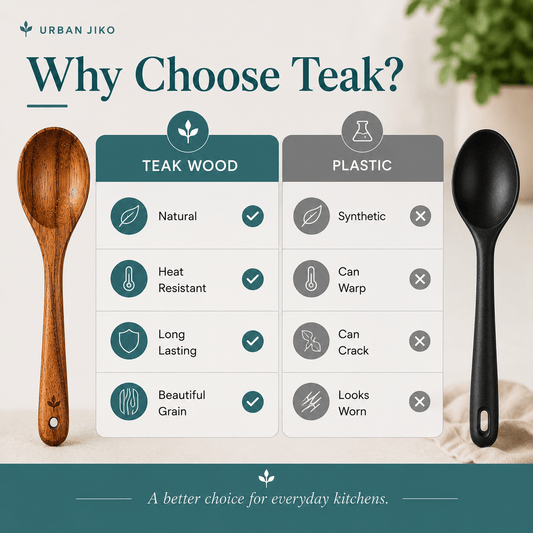
Teak, acacia and stainless behave differently on heat, on non-stick and in water. The material decides the lifespan.
Whole sets over singles
A matched set covers every task and costs less than assembling the same range one piece at a time.
Care you will actually do
Hand-wash tools last decades if you dry them. Choose the routine you will keep to.
-
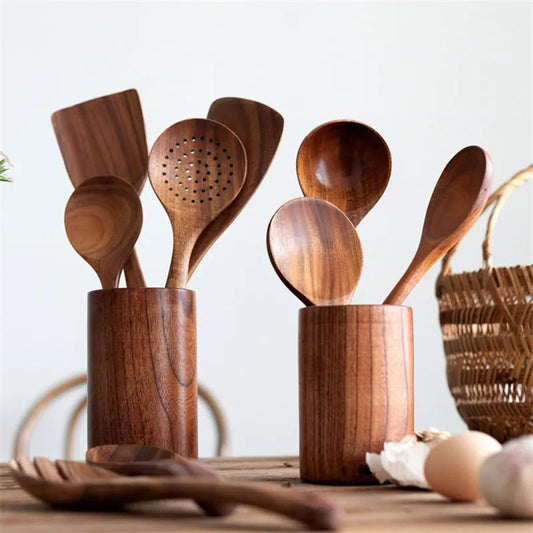
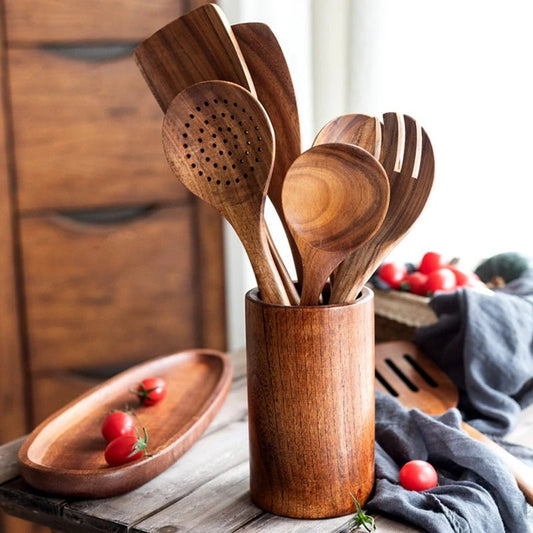
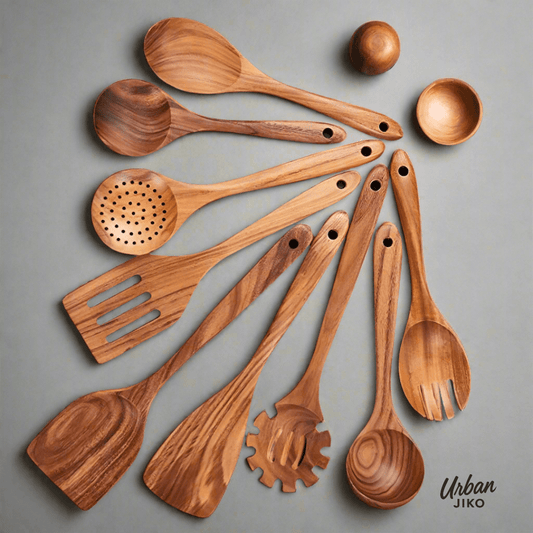
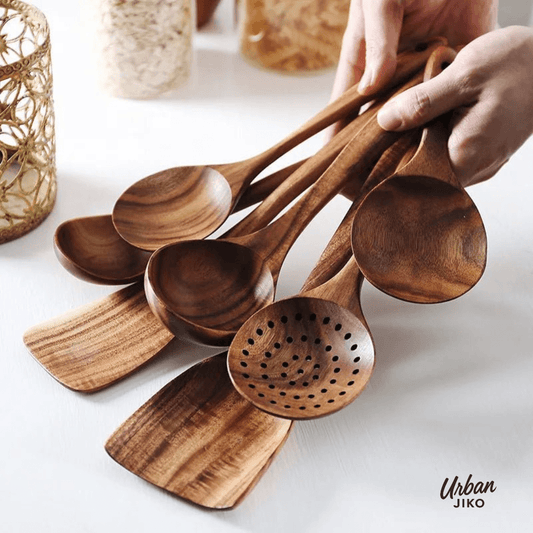
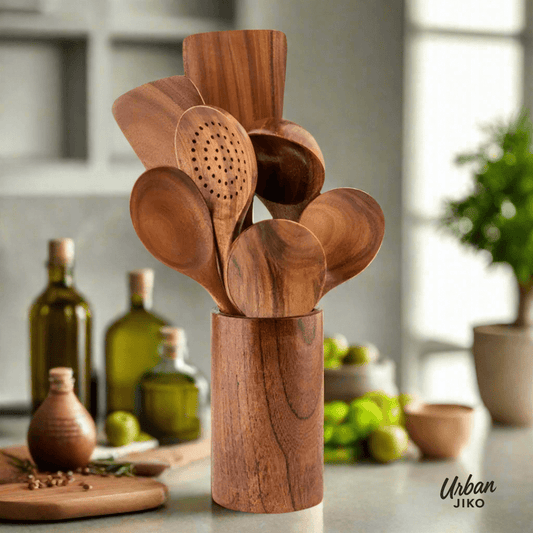
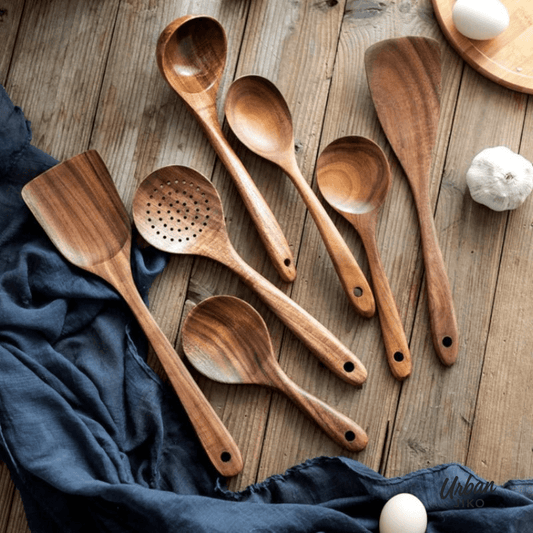
Teak Wooden Utensil Set
Regular price From $79.97 USDRegular price$160.00 USDSale price From $79.97 USDSale -
Premium Wooden Utensil Holder
Regular price $39.97 USDRegular price$80.00 USDSale price $39.97 USDSale -
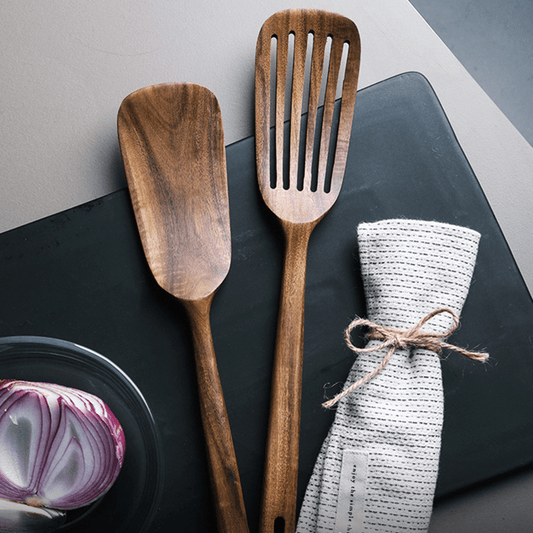
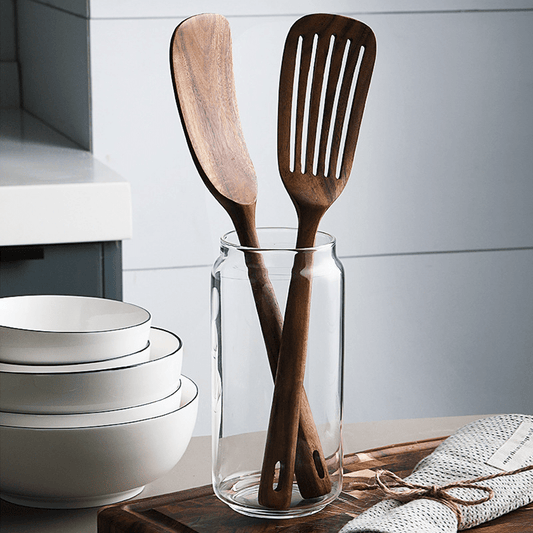
2-Piece Teak Wooden Spatula Set
Regular price $39.97 USDRegular price$80.00 USDSale price $39.97 USDSale -
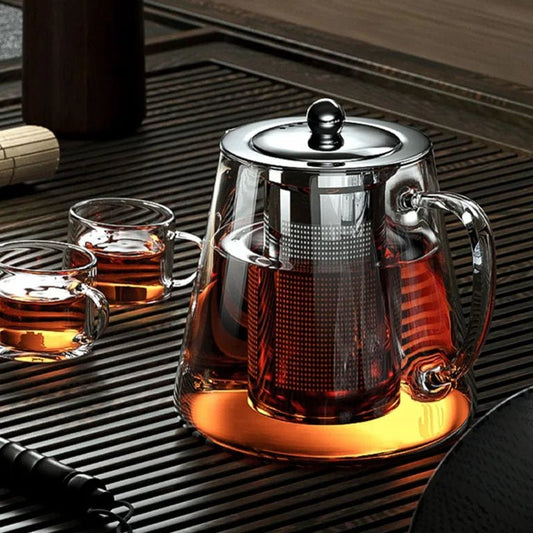
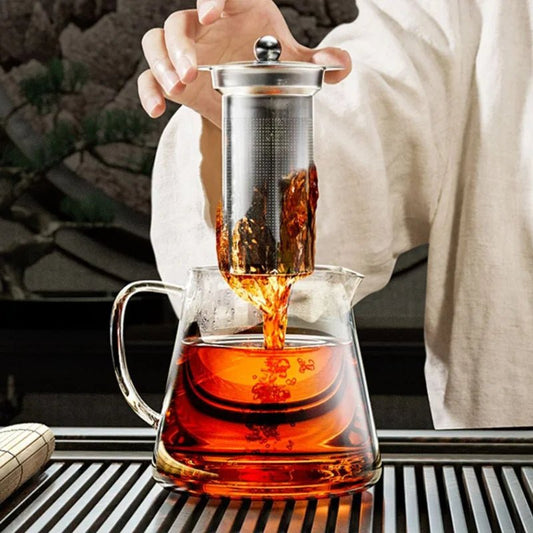
Heat Resistant Glass Teapot with Stainless Steel Tea Strainer
Regular price From $39.97 USDRegular price$80.00 USDSale price From $39.97 USDSale -
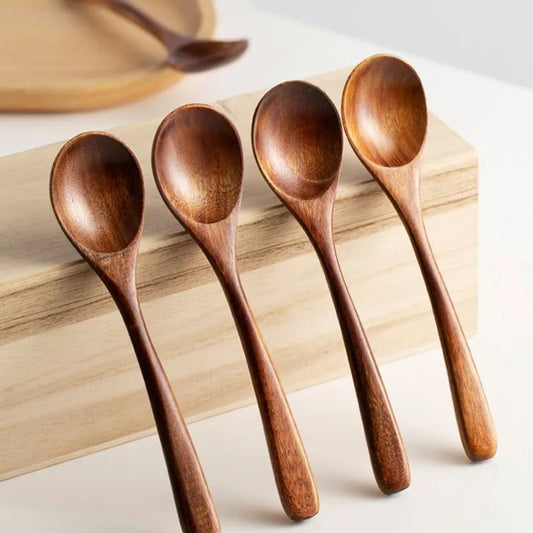
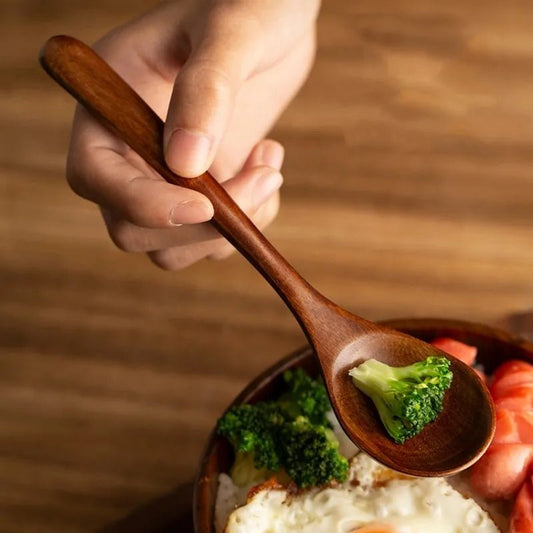
Premium Wooden Eating Spoons (4 set)
Regular price $24.97 USDRegular price$50.00 USDSale price $24.97 USDSale -
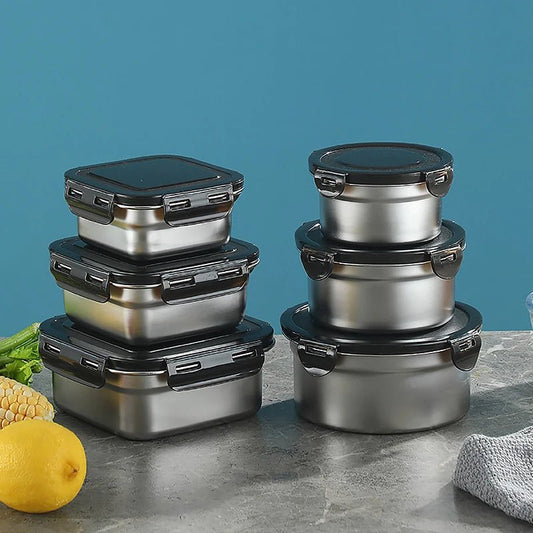
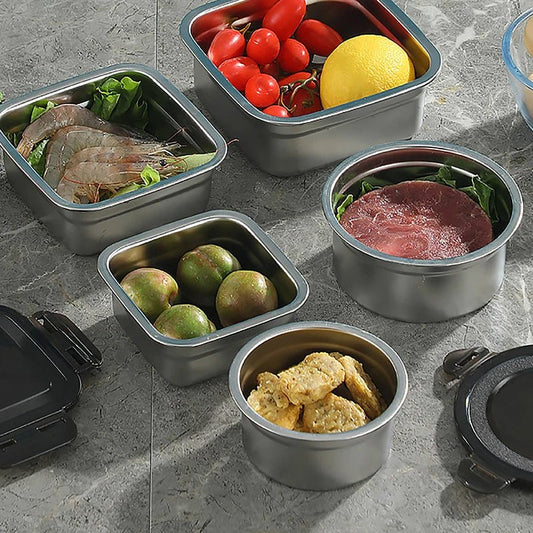
Stainless Steel Food Storage Containers with Snap Seal Lid
Regular price $49.97 USDRegular price$100.00 USDSale price $49.97 USDSale -
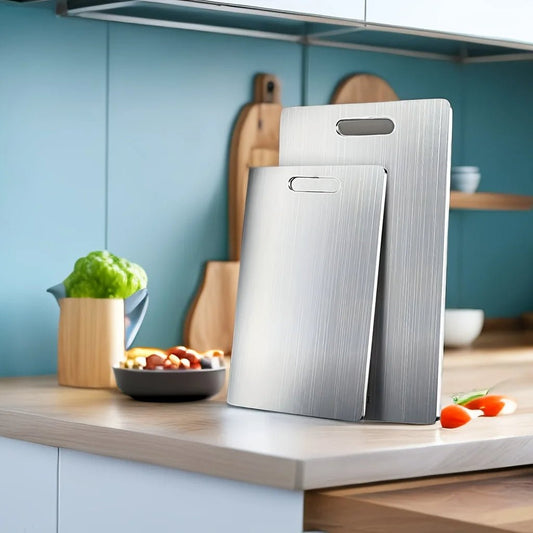
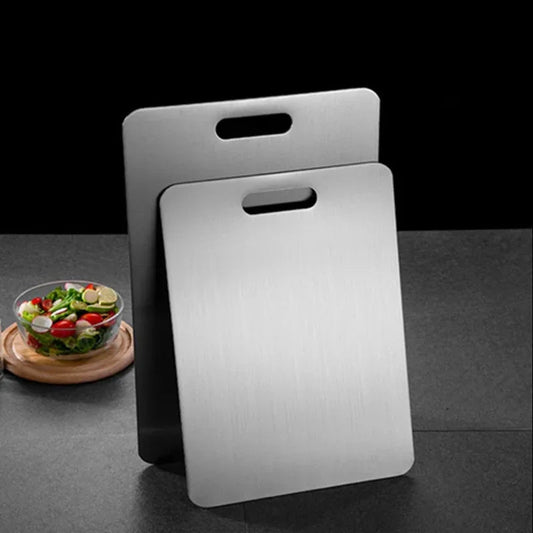
TitanChef Pro Cutting Board
Regular price From $44.97 USDRegular price$90.00 USDSale price From $44.97 USDSale -
9-Piece Teak Wooden Utensil Set
Regular price $99.97 USDRegular price$200.00 USDSale price $99.97 USDSale -
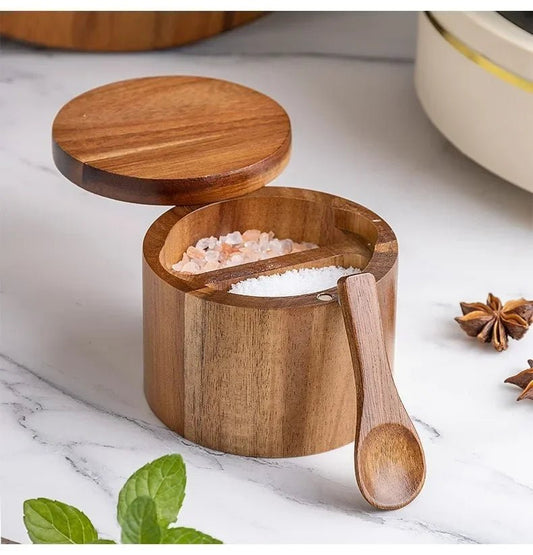
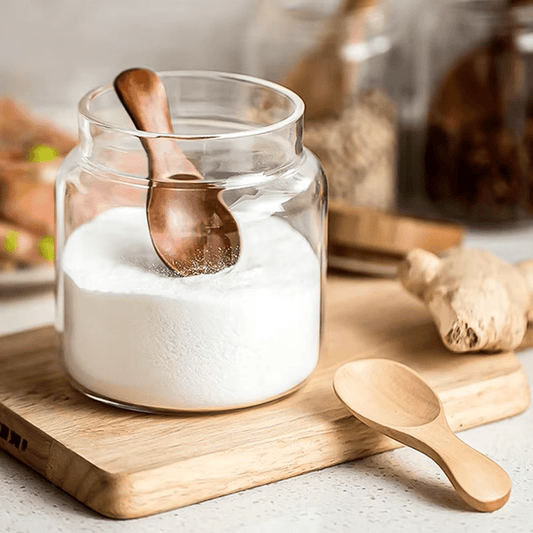
Salt & Pepper Jar with Seasoning Spoon
Regular price From $39.97 USDRegular price$80.00 USDSale price From $39.97 USDSale -
 Sale
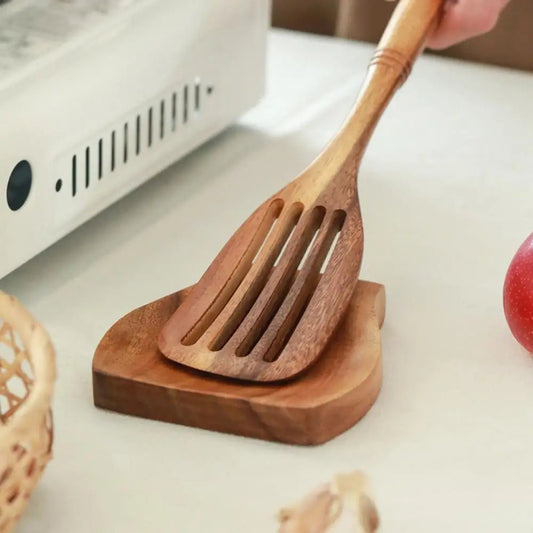
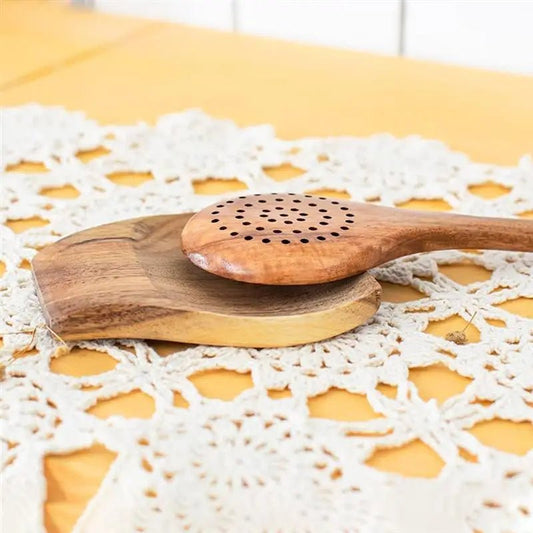
SaleTeak Spatula Rest
Regular price $19.97 USDRegular price$40.00 USDSale price $19.97 USDSale -
Food Grade Mineral Oil
Regular price From $34.97 USDRegular price$70.00 USDSale price From $34.97 USDSale -
12-Piece Teak Wooden Utensil Set
Regular price $129.97 USDRegular price$260.00 USDSale price $129.97 USDSale -
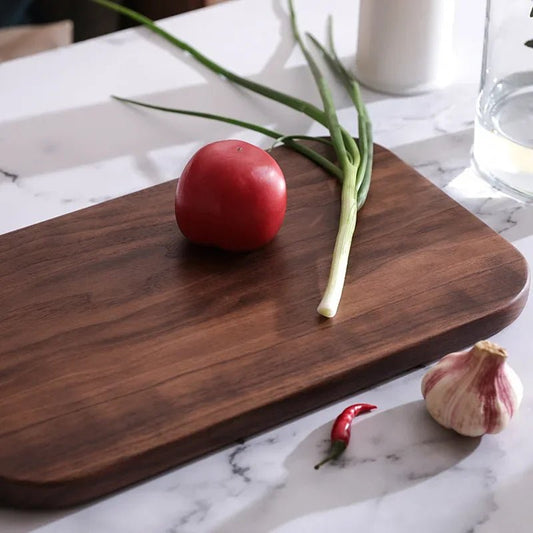
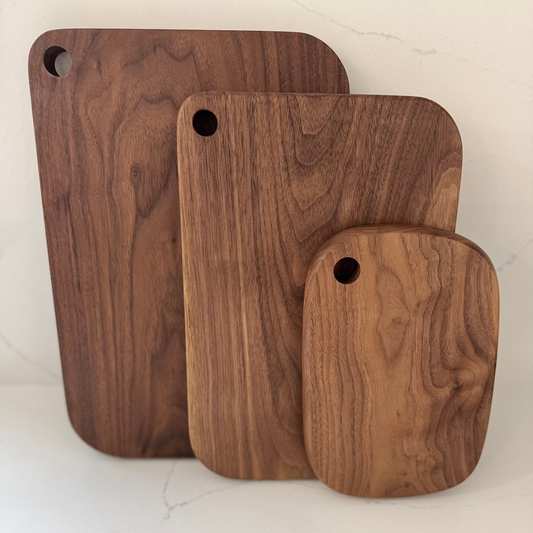
Rich Walnut Solid Chopping Board
Regular price From $54.97 USDRegular price$110.00 USDSale price From $54.97 USDSale -
8-Piece Teak Wooden Utensil Set (Holder Included)
Regular price $119.97 USDRegular price$240.00 USDSale price $119.97 USDSale -
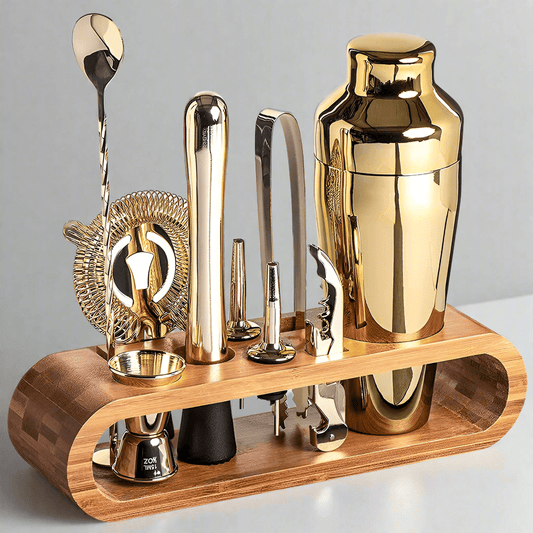
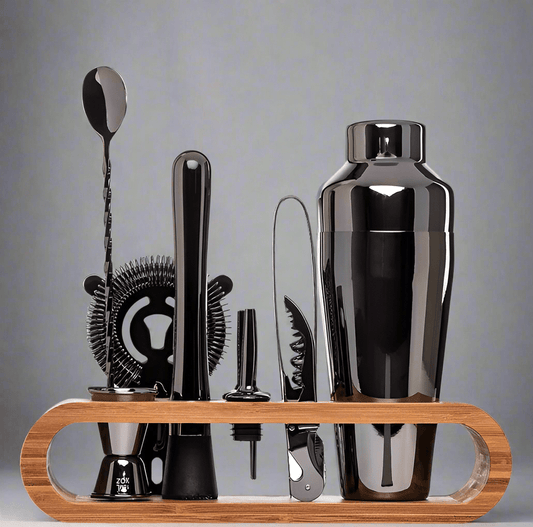
Cocktail Mixology Set
Regular price $119.97 USDRegular price$240.00 USDSale price $119.97 USDSale -
7-Piece Teak Wooden Utensil Set
Regular price $79.97 USDRegular price$160.00 USDSale price $79.97 USDSale -
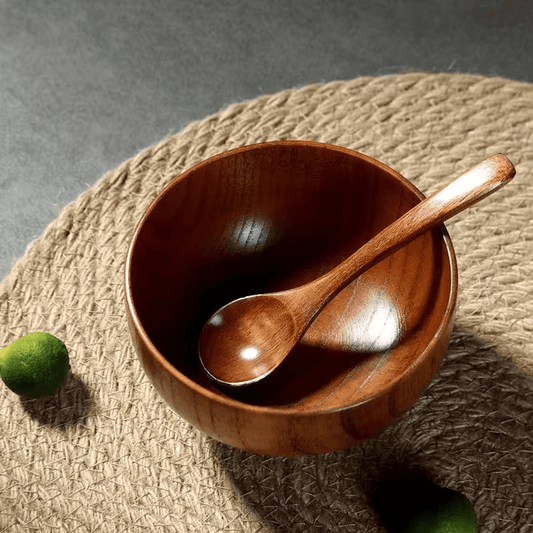
Japanese Jujube Wooden Bowls
Regular price From $49.95 USDRegular price$90.00 USDSale price From $49.95 USDSale -
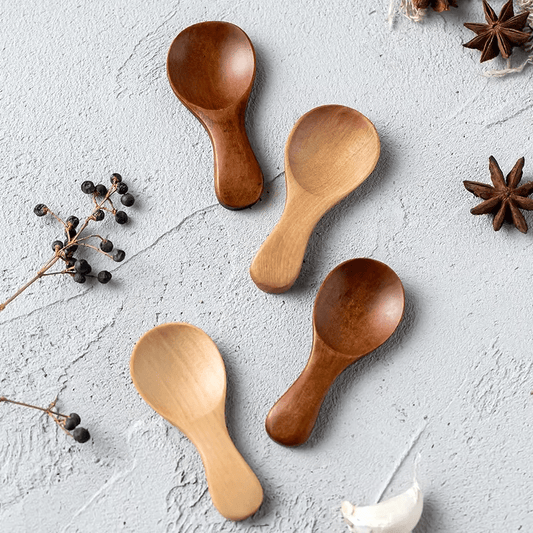
Wooden Condiment Spoons (4 Pack)
Regular price $24.97 USDRegular price$50.00 USDSale price $24.97 USDSale -
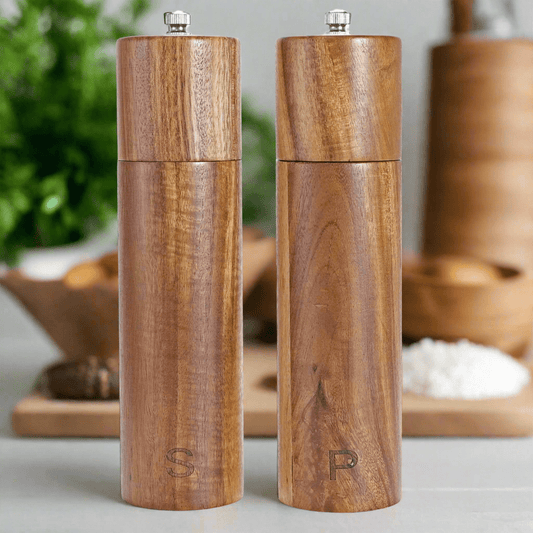
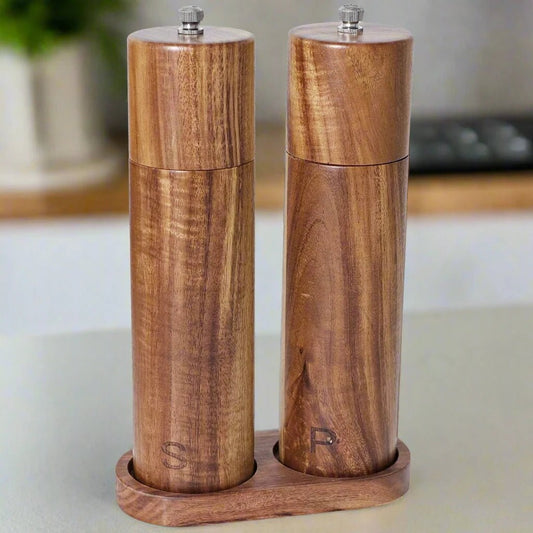
Acacia Wood Salt & Pepper Grinders
Regular price From $34.97 USDRegular price$70.00 USDSale price From $34.97 USDSale -
11-Piece Teak Wooden Utensil Set
Regular price $119.97 USDRegular price$240.00 USDSale price $119.97 USDSale -
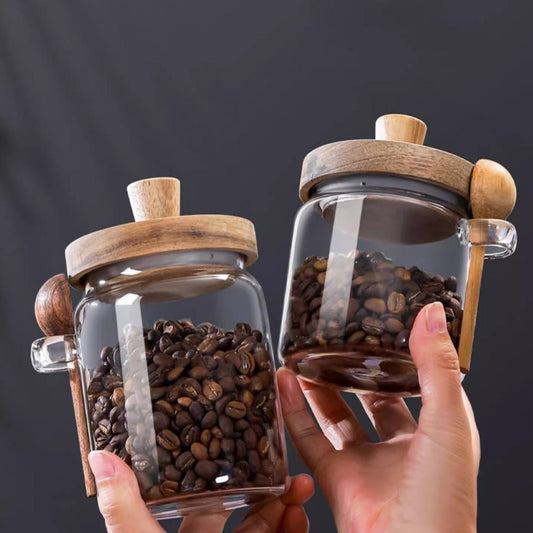
Oak & Glass Airtight Jar
Regular price From $29.97 USDRegular price$60.00 USDSale price From $29.97 USDSale -
4-Piece Teak Wooden Utensil Set
Regular price $59.97 USDRegular price$120.00 USDSale price $59.97 USDSale -
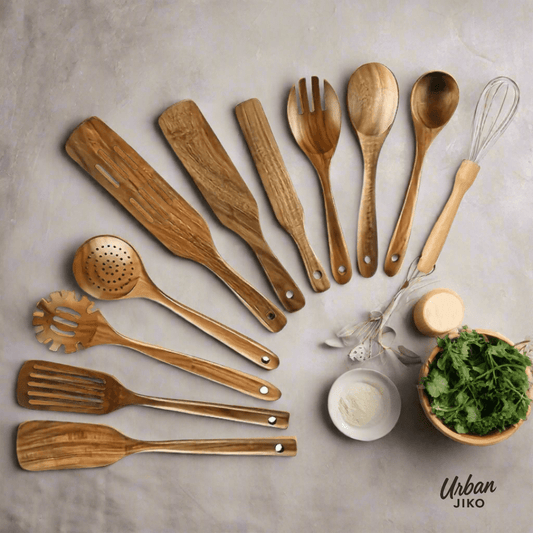
10-Piece Teak Wooden Utensil Set
Regular price $109.97 USDRegular price$220.00 USDSale price $109.97 USDSale -
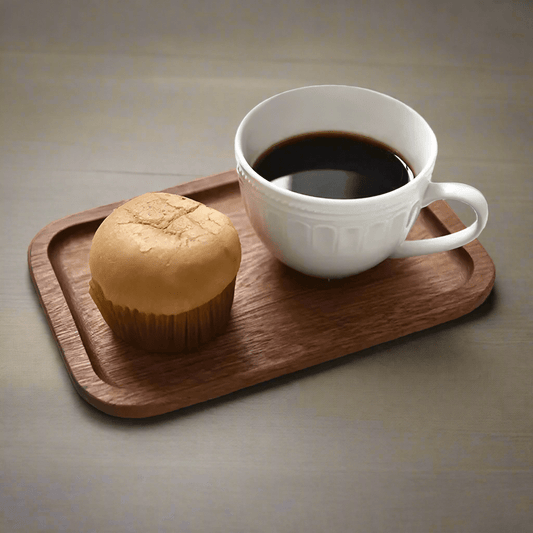
Acacia Wood Side Trays
Regular price From $9.97 USDRegular price$120.00 USDSale price From $9.97 USDSale









- Free shippingOn orders over $60
- 30-day returnsNo fuss
- Ships in 24–48hFrom our own stock
- Non-toxic materialsNo coatings
What to know before you buy.
What kitchen utensils do I actually need?
A turner, a slotted spoon, a ladle, a serving spoon and tongs cover almost everything most people cook. A 12-piece set adds the specialists — pasta spoon, rice scoop, whisk — for less than buying them separately later.
Are wooden utensils better than silicone or metal?
For non-stick and ceramic pans, yes. Wood will not scratch a coating the way metal does, and it does not soften at frying temperatures the way cheaper silicone can. Metal is still the right choice for cast iron and high-heat searing.
Can wooden kitchen tools go in the dishwasher?
Hand washing is what we recommend. A dishwasher's heat and detergent strip the natural oils that keep hardwood supple, so a quick wash and dry by hand is what takes a set from five good years to fifteen.
How long do good wooden utensils last?
Years, and often decades. Dense hardwood dried after each wash keeps its surface sealed and its colour deepening — well-made tools routinely outlast the pans they are used in.
What is the difference between teak and bamboo?
Bamboo is a grass, laminated from strips with adhesive, and absorbs water quickly. Teak is a dense hardwood with natural oils and silica that resist moisture on their own, so it stays stable far longer.
Kitchen notes, once a month.
Care guides, new arrivals and the occasional recipe. One email a month.
Unsubscribe any time.
