


Safari Kitenge Doll Set
Safari Kitenge Doll Set
- Hand-sewn
- Kitenge cloth
- No two alike
- Hand-sewn by East African artisans
- Made in Kenya and Tanzania
- No two sets are identical
- Bought direct from the makers
Couldn't load pickup availability
A month to be sure.
Nothing to rush, and nothing to lose if it is not right.
- Free shipping over $60
- 30 days to change your mind
The story
The story
Safari, sewn by hand.
Six animals — zebra, giraffe, lion, elephant, rhino and hippo — each one cut, stitched and stuffed by hand in small workshops in East Africa.
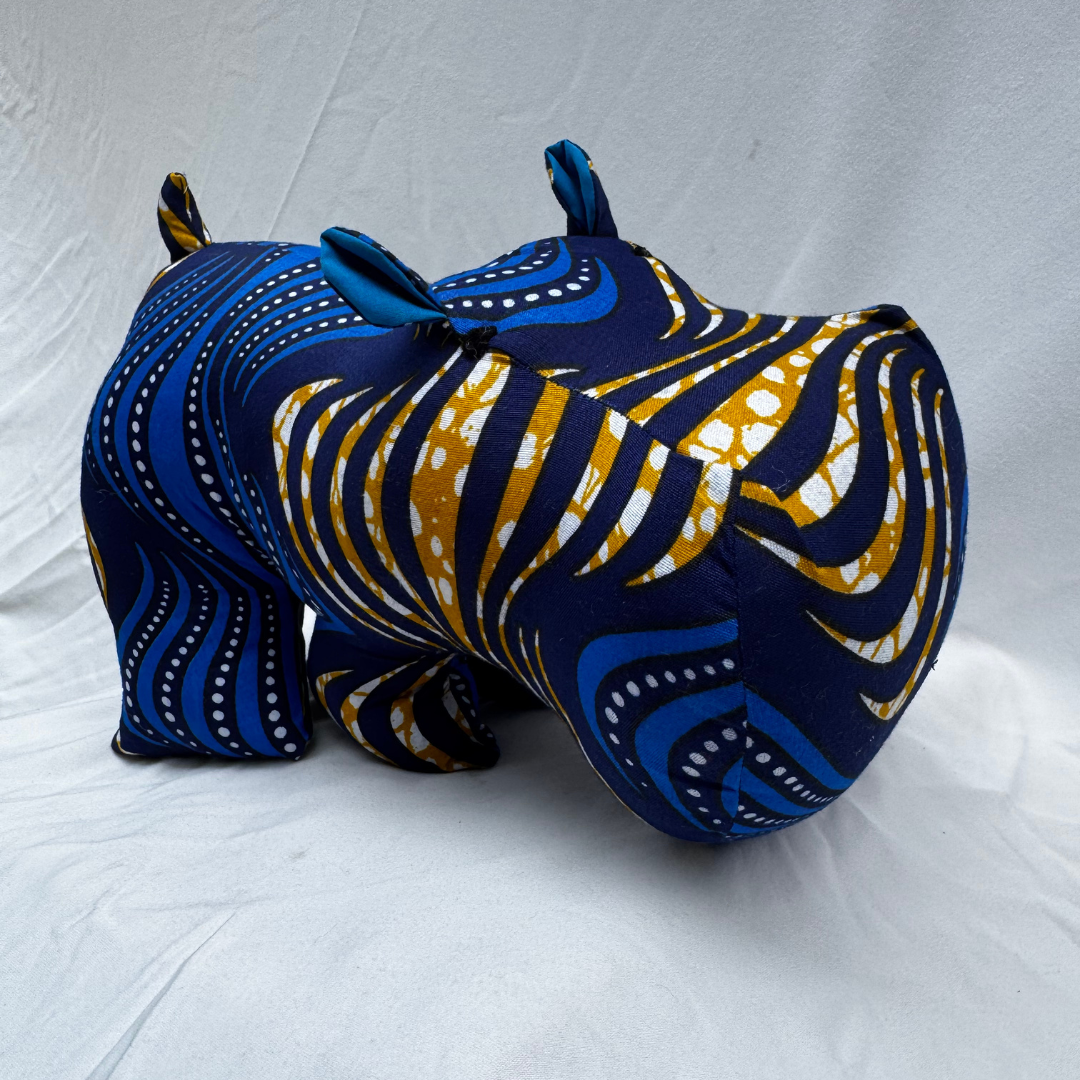
They are made from kitenge, the bold printed cotton worn across Kenya, Tanzania and Uganda. Because the cloth is patterned and cut by hand, no two sets ever come out alike. The lion in yours has its own colours, its own arrangement, its own particular character. There is not another set exactly like it anywhere.
Everything on them is stitched — the eyes, the features, the lion's yarn mane. Nothing plastic, nothing glued on. Inside is locally sourced organic cotton, which is what gives them their weight in the hand.
We work directly with the artisans who make them. No exporter, no importer, no distributor taking a margin on the way — which is why more of what you pay reaches the people who did the work.
What's included
What's included
Every set contains six animals:
- Zebra
- Giraffe
- Lion — with a hand-made yarn mane
- Elephant
- Rhino
- Hippo
Small, medium and large change the size of the animals, not the number. Every set has all six.
Materials and care
Materials and care
Materials. Kitenge — the printed cotton worn across East Africa — over a filling of locally sourced organic cotton. Eyes and features are stitched on with thread, and the lion's mane is hand-made yarn. Stitched throughout, nothing glued on.
Care. Spot clean with a barely damp cloth and leave to dry away from direct heat. The filling is natural cotton rather than synthetic, which is what gives them their weight in the hand — and it is why they should stay out of the sink and the machine.
Shipping and returns
Shipping and returns
Shipping. Ships in 24–48 hours. Free worldwide shipping on orders over $60.
Returns. Thirty days to change your mind. If it is not right we will put it right.


- Hand-sewn by artisansin Kenya and Tanzania
- Kitenge clothsourced in East Africa
- No two are identicalevery set is one of a kind
- Bought directfrom the people who make them

Sewn by hand, in Kenya and Tanzania.
Six animals — zebra, giraffe, lion, elephant, rhino and hippo — cut, stitched and stuffed by hand in small workshops in East Africa. The cloth is kitenge, the bold printed cotton worn across Kenya, Tanzania and Uganda, and it is chosen piece by piece, which is why no two sets ever carry the same pattern.
We buy from the workshops directly. No exporter, no importer, no distributor taking a margin on the way.
- Six animals in every set
- Filled with organic cotton
- Features stitched, never glued
Six animals, one safari.
Every set has all six. Small, medium and large change how big they are, not how many you get.

Zebra
Pattern over pattern. Whatever the cloth is doing, the zebra doubles it.

Giraffe
The tall one. Long neck, long legs, and a print that runs the whole way down.

Lion
The mane is hand-made yarn, knotted in by hand. No two sit quite the same way.

Elephant
Big ears, wide feet, and the steadiest shape in the set.

Rhino
Blunt and solid, with the heaviest silhouette of the six.

Hippo
All mouth, no menace. The one that usually gets the laugh.


From a bolt of cloth to something with a face.


- 6
- animals in every set
- 100%
- organic cotton filling
- 30 days
- to change your mind
What the difference actually buys.
| Feature | This set | Mass-produced plush |
|---|---|---|
| Filling | Organic cotton | Polyester wadding |
| Outer cloth | Kitenge, cut by hand | Printed synthetic pile |
| Eyes and features | Stitched with thread | Moulded plastic, fixed on |
| How many are alike | None — every set differs | Every unit identical |
| Made by | Artisans in Kenya and Tanzania | Factory line |
| Route to you | Workshop, us, you | Five or six hands in between |
More of it reaches the people who made it.
Most handmade goods pass through five or six hands before they reach yours, and every one of them takes a margin. We buy straight from the workshop and sell straight to you.

- Artisan

- You

vs. the usual route
- Artisan
- Exporter
- Importer
- Brand
- Distributor
- Retailer
- You
Same hands. Fewer of them in between.

Six animals, one obvious present.
A new arrival, a birthday, or a shelf that needs something with a face on it. Hard to pick the wrong one when no two are the same.
Frequently asked about this piece
Why do no two look exactly the same?
Because the kitenge is cut by hand from patterned cloth, every animal is made from a different part of the fabric. The one you receive carries its own colours and its own arrangement — that is what buying something hand-made means.
What is kitenge?
Kitenge is the bold printed cotton cloth worn across East Africa — Kenya, Tanzania and Uganda. It is everyday fabric there, and it is what gives each animal its colour.
Where are they made?
In workshops in Kenya and Tanzania, by artisans we buy from directly rather than through exporters and distributors.
Is this suitable for a young child?
Everything on them is stitched on with thread — the eyes, the features, the lion's mane — so there is nothing glued on that could work loose. They are still hand-made pieces rather than safety-tested toys, so with very young children we would keep play supervised.
How do I clean them?
Spot clean with a barely damp cloth, then leave to dry away from direct heat. They are filled with natural cotton rather than synthetic wadding, which is what gives them their weight — and it is why they should stay out of the sink and the washing machine.
What if I change my mind?
Thirty days to change your mind, no hassle. If it is not right we will put it right.
