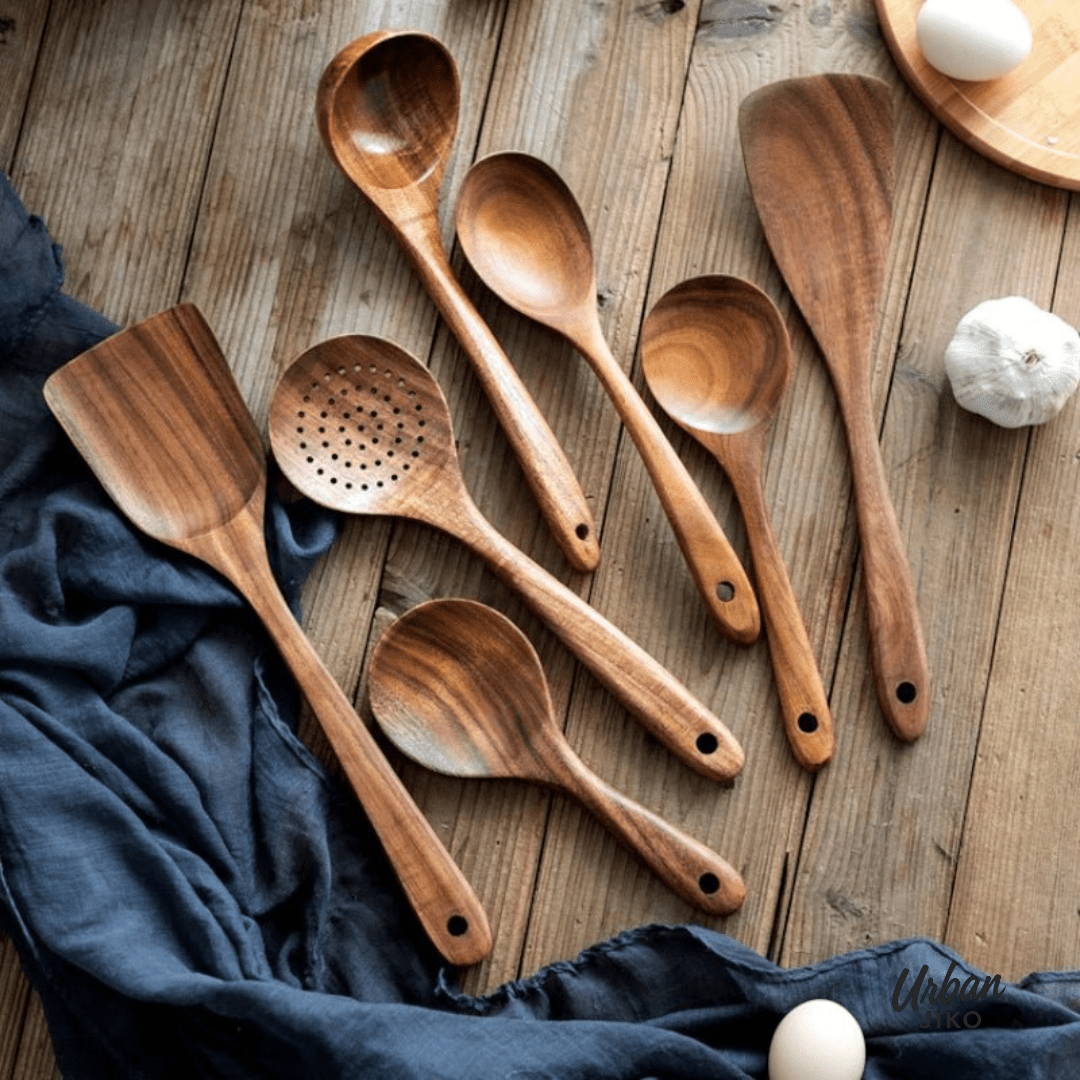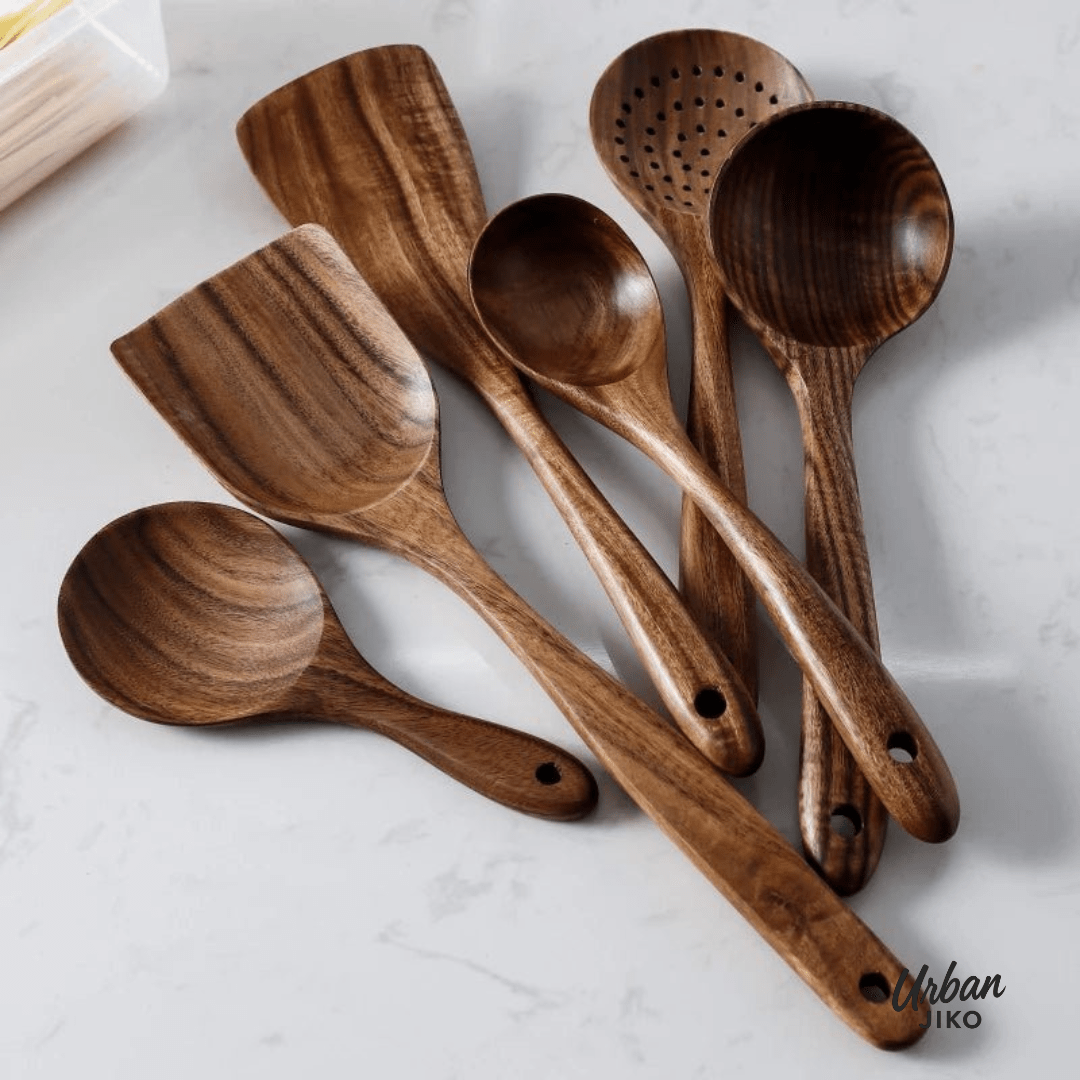

5 reasons to get plastic out of your kitchen.
The tools you cook with every day are the ones you think about least. Here is the case for changing them — and what to change them to.
Five reasons, in the order they matter.
None of this is about cooking better. It is about what your tools are made of, and what that does over years of daily use.
-
 Reason 01
Plastic sheds what you can’t see.
Research has found that plastic kitchen tools release microscopic particles into food during ordinary cooking — and that heat and scraping make it worse. A spatula pressed against a hot pan is doing both at once. Teak is dense, solid hardwood: there is no coating to break down and nothing to shed into dinner.
Sheds particles into hot foodSolid hardwood, nothing to release -
 Reason 02
Heat is where plastic gives up.
Leave a plastic spoon resting on the pan and it softens, curls and marks. It is the most common way a utensil ends its life, and it happens in seconds. Teak holds its shape at cooking temperatures, so the tool you reach for looks the same in year three as it did on day one.
Softens and warps on a hot panHolds its shape at cooking heat -
 Reason 03
Scratches are where the mess lives.
Every knife stroke and every scrape leaves a cut in a plastic surface, and residue settles into cuts a sponge cannot reach. Research comparing wood with scored plastic has consistently favoured wood. Teak’s own oils keep its grain closed, so a rinse and a dry actually finishes the job.
Knife scores trap residueNaturally oil-rich, wipes clean -
 Reason 04
It won’t stain, cloud, or hold a smell.
Turmeric, tomato and curry stain plastic on the first use and never fully leave, and neither does the smell of last week’s garlic. Teak takes none of it. What it does instead is darken, slowly, into a patina — the rare kitchen tool that looks better used than new.
Stains and holds odoursAges into a warm patina -
 Reason 05
One set instead of a drawer you keep restocking.
Melted, stained and cracked plastic tools get thrown out and bought again, season after season, and every one of them outlives us in landfill. Teak is a renewable hardwood, and an occasional wipe of food-grade oil is the whole of the maintenance. Buy once, cook with it for years.
Replaced season after seasonRenewable, built for years of daily cooking


Free shipping on $60+ · 30-day satisfaction guarantee
Teak against everything else in the drawer.
The choice becomes obvious side by side.
| Feature | Teak (This Set) | Plastic | Metal / Steel | Cheap Wood |
|---|---|---|---|---|
| Safe for non-stick pans | Yes | Yes | No | Mostly |
| Heat resistant (no melting) | Yes | No | Yes | Yes |
| Naturally water-resistant | Yes | Yes | Yes | No |
| 100% non-toxic, chemical-free | Yes | No | Varies | Varies |
| Resists cracking and warping | Yes | Short-term | Yes | No |
| Looks premium | Yes | No | Industrial | Fades |
| Lasts 5+ years with normal use | Yes | No | Yes | No |
Free shipping over $60 · 30-day satisfaction guarantee

Change five tools. Notice it every day.
One set replaces the drawer full of tools quietly working against you.
2,400+ cooks already made the switch.
I replaced every plastic utensil in my kitchen with this set. The difference is night and day — they feel premium, they don’t scratch my pans, and they look gorgeous on the counter.
Three years in and they still look new. I oil them once a year and that’s it. Best kitchen purchase I’ve made.
Bought these after ruining a non-stick pan with a metal spatula. Wish I’d done it sooner.
The questions people ask when they make the change.
Are they really non-toxic and food-safe?
Yes. Natural teak with no synthetic coatings, stains, lacquers or chemical sealants — what you cook with is pure hardwood. A good choice for families with children, or anyone reducing their exposure to plastics.
Are these dishwasher safe?
We recommend hand washing to preserve the wood's natural oils. Rinse with warm water and mild soap, dry immediately, and they'll stay in excellent condition for years.
Occasional dishwasher use is unlikely to cause immediate damage, but regular exposure to harsh heat and detergent will accelerate drying and cracking.
Will they scratch my non-stick pans?
No. Teak is hard enough to be durable but soft enough to glide across non-stick and ceramic surfaces without marking them.
Do they require oiling or special maintenance?
Unlike bamboo or softer woods, teak doesn't need regular oiling — its own oil content does that work. In a very dry climate, or after a year or two of heavy use, a light application of food-grade mineral oil restores the finish.
How long will they actually last?
With normal daily use and basic care, teak utensils last 10–15 years or more. Many customers report their sets still looking and performing well after several years of regular cooking.
- Free shippingOn orders over $60
- 30-day guaranteeChange your mind, no fuss
- Ships in 24–48hFrom our own stock
- Non-toxicNo coatings, ever

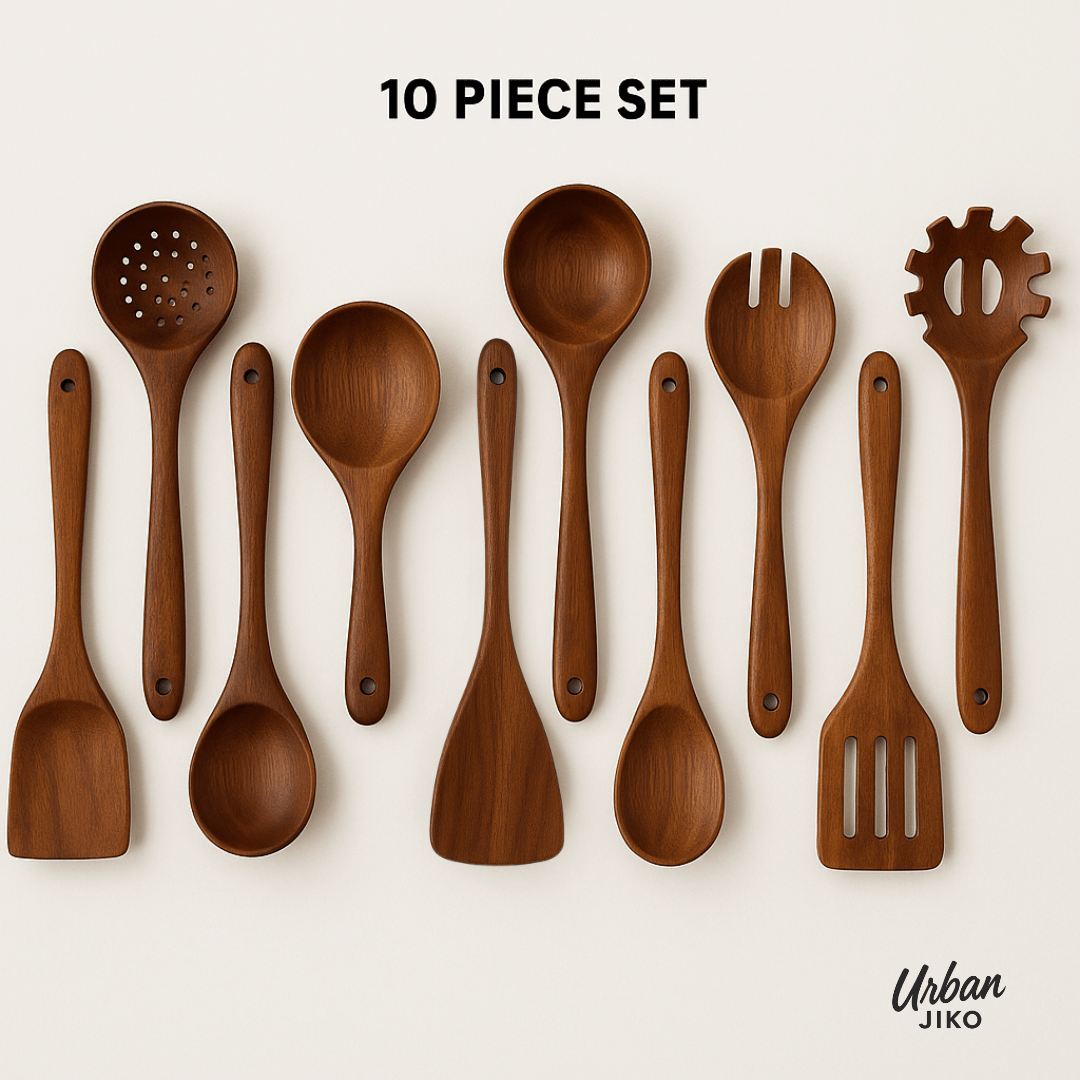
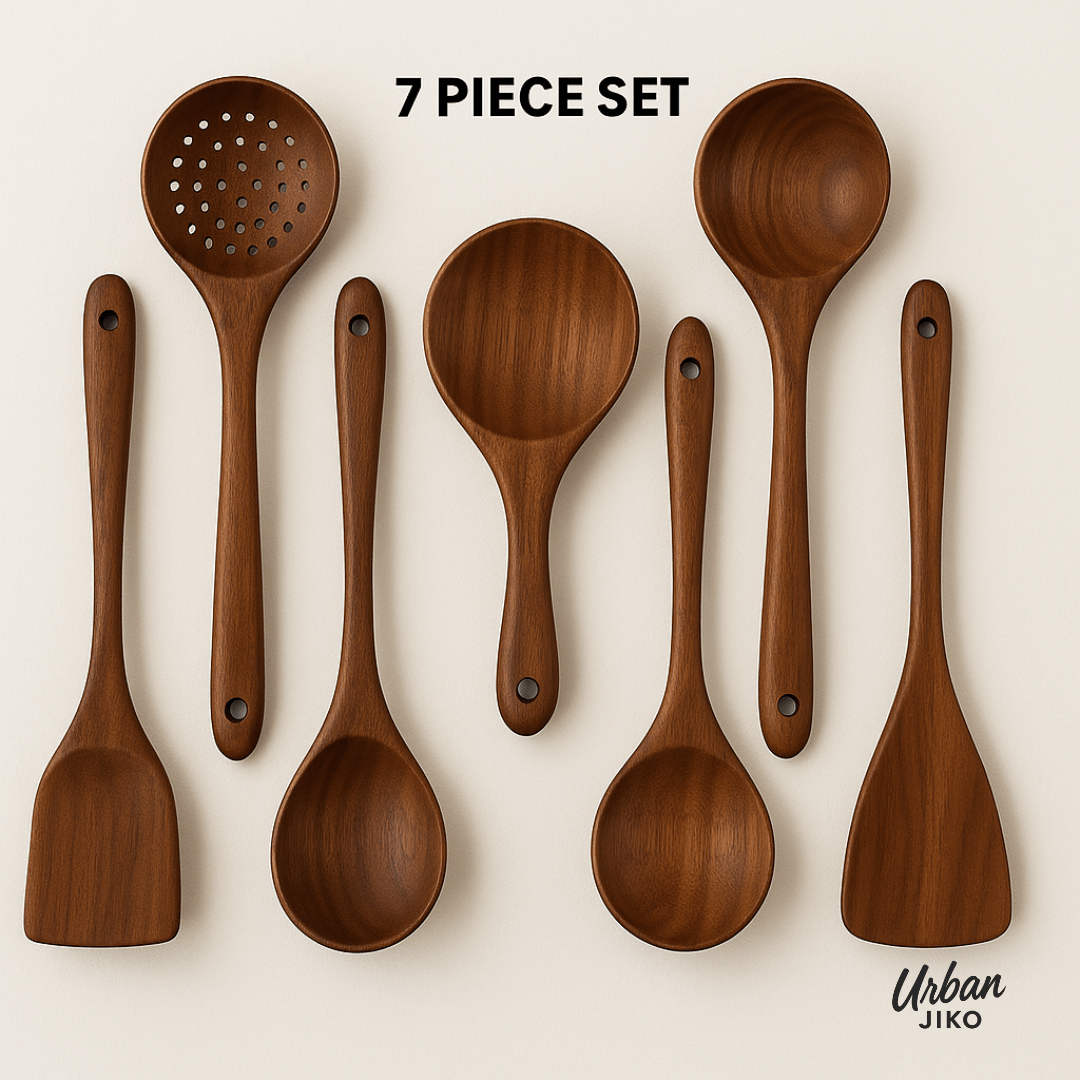
Teak Wooden Utensil Set
- Solid teak
- Food-safe oil finish
- No glues or fillers
- Heat resistant to 200°C
- Won't absorb odours or stain
- Naturally water-resistant
- Food-safe, no coatings